Recruitment Automation
AI Interviewers: The 2026 Guide for High-Volume Recruiting

AI interviewers are becoming a core part of high-volume recruiting in 2026. Instead of relying only on recruiters to schedule, screen, and evaluate every candidate manually, companies are using AI interview tools to conduct structured interviews, assess responses, rank candidates, and move qualified applicants forward faster.
For roles with hundreds or thousands of applicants, this can reduce screening delays, improve consistency, and give recruiting teams more time to focus on final-stage hiring decisions.
But AI interviewers also bring important questions around candidate experience, fairness, transparency, bias, and human oversight. In this guide, we’ll explain how AI interviewers work, where they help most, what risks to watch for, and how hiring teams can use them responsibly in high-volume recruiting.
What Is an AI Interviewer?

An AI interviewer is an autonomous, agentic artificial intelligence system capable of conducting structured, real-time voice, video, or chat interviews with candidates without a human recruiter present. Unlike basic AI chatbots that simply ask yes/no screening questions via text, modern AI interviewers use dynamic, conversational AI to evaluate complex soft skills, situational judgment, and technical competencies.
According to 2026 hiring data, AI use in talent acquisition has surged, with 80% of enterprises expected to use AI for significant parts of their hiring process this year. AI interviewers act as a 24/7 extension of the recruiting team, capable of running hundreds of tailored interviews simultaneously while ensuring every candidate receives the exact same baseline evaluation.
How AI Interviewers Reduce Time-to-Hire

The traditional high-volume hiring funnel is notoriously slow. Playing phone tag, scheduling initial screens, and waiting for hiring manager feedback can stretch the time-to-hire out for weeks. AI interviewers address these bottlenecks directly:
Zero-Wait Scheduling: Candidates can initiate a live voice or video interview immediately after applying, whether it is 2:00 PM on a Tuesday or 11:30 PM on a Sunday. This instant gratification is why organizations using AI recruiting see their time-to-hire drop by up to 50%.
Automated Scorecards: Instead of relying on a recruiter's handwritten notes, AI interviewers generate instant, structured scorecards and transcripts mapped directly to the role's required competencies.
Handling High-Volume Surges: When you need to hire 200 seasonal retail workers or warehouse staff in a week, a human team simply cannot screen every applicant. AI can interview thousands of candidates simultaneously, ensuring you never miss a great hire just because your recruiters ran out of hours in the day.
Key Features to Look For in an AI Interviewer
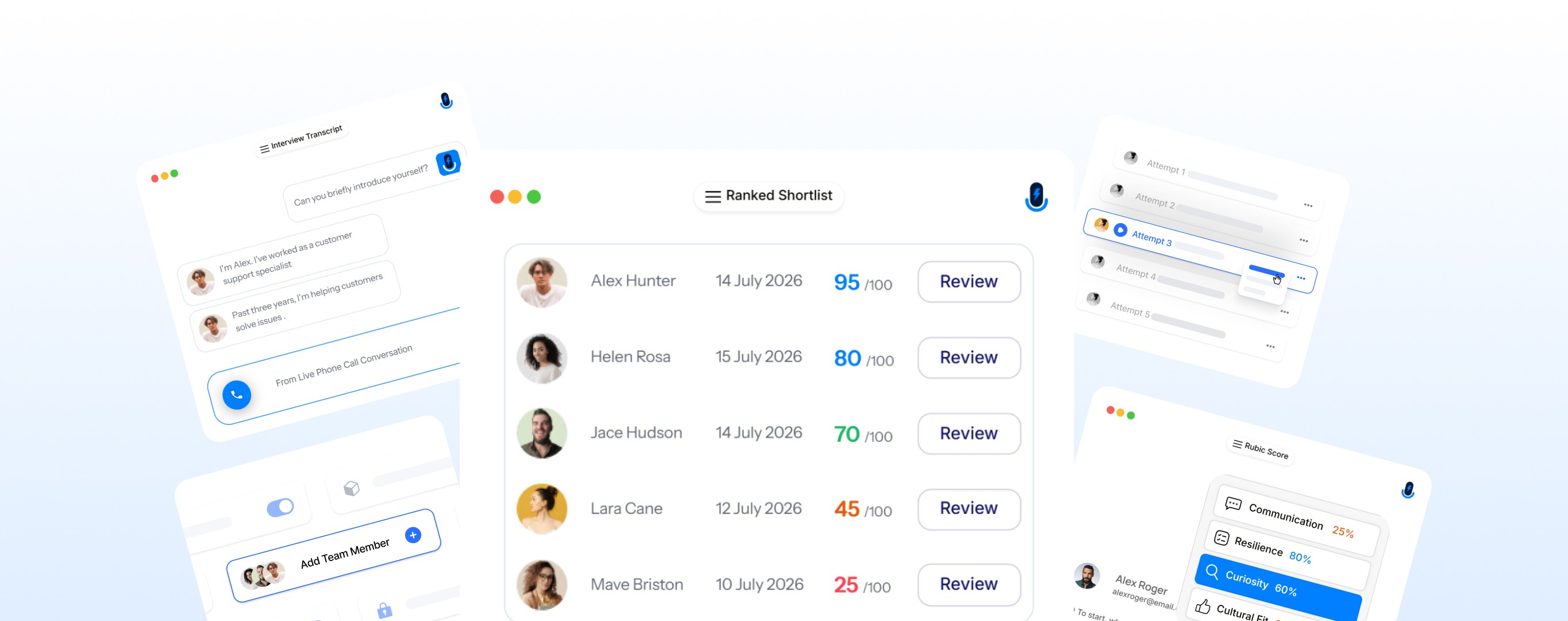
Not all AI recruiting tools are created equal. As the market shifts toward agentic AI in 2026, here are the non-negotiable features you need for high-volume recruiting:
Real-Time Adaptability: The AI must do more than read a script. It needs to listen to the candidate's response and ask spontaneous, context-aware follow-up questions. This prevents candidates from relying on pre-written notes.
Multimodal Assessment: Text-based chatbots (like Paradox) are great for basic scheduling, but evaluating communication skills and culture fit requires voice or video capabilities.
Seamless ATS Integration: Your AI interviewer must integrate bidirectionally with your Applicant Tracking System (ATS). It should pull job requirements to build the interview and push the completed transcript and scorecard back to the candidate's profile automatically.
Built-in Bias Guardrails: Look for platforms that use standardized rubrics and undergo regular third-party bias auditing to comply with modern regulations like the EU AI Act.
How SonicHire Can Help
When you need to move beyond basic chatbot screening and actually evaluate candidate quality at scale, SonicHire is the premier solution.
SonicHire is built specifically to handle the demands of high-volume hiring through autonomous, conversational voice screening. While tools like JobTalk AI rely on routing candidates to live human recruiters (which creates bottlenecks during off-hours), SonicHire acts as a 24/7 autonomous agent. It engages candidates the moment they apply, conducts a dynamic voice interview tailored to the specific requisition, and delivers a structured, objective scorecard directly to your ATS.
By eliminating the manual drudgery of first-round phone screens, SonicHire allows your human recruiters to focus entirely on closing the best talent.
Frequently Asked Questions (FAQ)
What is an AI interview?
An AI interview is a job screening process where an artificial intelligence system, rather than a human recruiter, asks questions, analyzes the candidate's responses, and evaluates their fit for a role using predefined, structured criteria.
How Do AI Interviewers Work?
AI interviewers use natural language processing (NLP) to understand a candidate's spoken or written answers. They compare these responses against a specific rubric of required skills and competencies, ask contextual follow-up questions, and generate a final scorecard for human recruiters to review.
How does an AI interviewer prevent cheating?
Advanced AI interviewers (like SonicHire) use dynamic conversational branching. Because the AI asks spontaneous follow-up questions based on the candidate's specific answers, it is nearly impossible for a candidate to use generative AI or scripted notes to cheat in real time.
Are AI interviews biased?
AI interviews can reduce bias by asking every candidate the exact same core questions and scoring them against a consistent rubric, ignoring factors like age, gender, or appearance. However, the AI must be rigorously trained and regularly audited by third parties to ensure its scoring models do not inadvertently favor certain speech patterns or backgrounds.
How much time does an AI interviewer save?
Organizations implementing AI interviewers typically see a 50% to 70% reduction in time-to-hire. By automating the initial screening phase, recruiters save an average of 20% of their work week, eliminating the hours previously spent playing phone tag and conducting repetitive initial interviews.
